2013
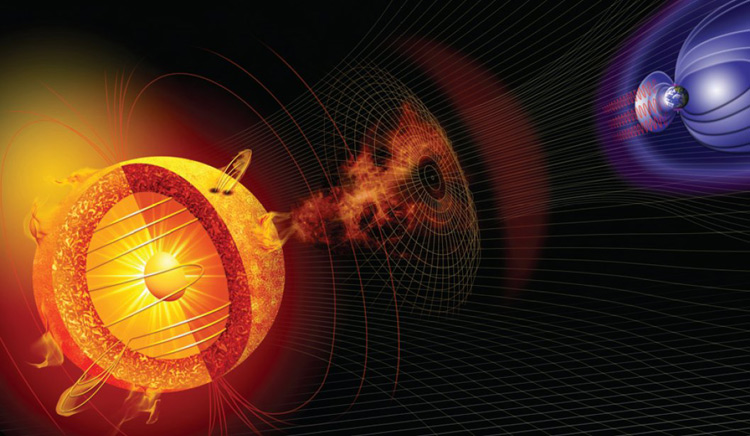
Solar flares are disrupting Earth's magnetosphere
The Sun reaches its solar maximum this year - the period of greatest activity in its 11-year solar cycle. Because of the unusually low level of activity in recent years, this has caused a sudden build up of energy now, with large "solar storms" hitting Earth's magnetosphere. These are strong enough to disrupt electronic systems on the ground. Satellites, air travel, car navigations, the banking system, hospital equipment, computers and many other machines are affected during this period.*
Credit: NASA
China overtakes the USA in scientific research
In terms of scientific output, China had been closing the gap between it and the developed world for several years. Thousands of new research papers were being published each year at an accelerating rate, while millions more students were entering universities as the country became more developed. At the same time, the United States had seen a steep drop in its own scientific and technological research. In 2004, China passed the United Kingdom, becoming second in terms of academic studies. The gap finally closes in 2013, as even the USA falls behind China.*

The Gaia mission is launched
While the naked human eye can see only a few thousand stars on a clear night, Gaia will map over a billion - approximately 1 percent of all stars within our own Milky Way galaxy - over the course of its five-year mission beginning in 2013. It will chart their brightness and spectral characteristics, as well as their positions and motions, forming a highly detailed three-dimensional map.*
3D technologies are widespread
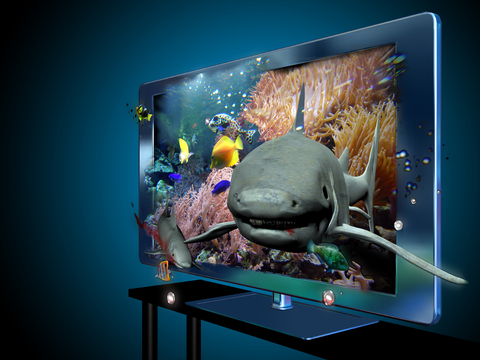
3D technology is now widespread across a range of communication and entertainment platforms. It has become a mainstream element of cinema, TV, Internet, video games and even mobile. This technology provides users with a whole new level of immersion, interaction and realism.
James Cameron's Avatar, released in 2009, was a major breakthrough in terms of developing this format and raising awareness of its potential.
In 2010, new 3D TV channels were introduced and these could even be viewed without 3D glasses.* This effect was achieved via multiple projectors behind the screen, combined with a lens array creating parallax effects from any direction. Among the TV events during this time was the first ever FIFA World Cup to be screened in 3D.
Compatibility was soon incorporated into a range of consumer products including Blu-ray recorders, games consoles and personal computers. By 2013, the technology has become widespread in homes in developed countries.*
© Philcold | Dreamstime.com
Highly flexible touch sensors are appearing in a range of gadgets
Highly flexible, film-based touch sensors are entering the smartphone and tablet markets.* They are also extending touch capabilities into a range of new consumer and industrial products. Using roll-to-roll metal mesh technology, they provide a high-performance alternative to existing touch sensors. Larger, lighter, sleeker, curved and edgeless designs can now be developed for handheld devices. Thinner sensor stacks with flawless touch performance, excellent optical clarity, low sheet resistance and low power consumption are enabling designers to turn unique, futuristic concepts into functional designs at lower total system costs compared to previous market alternatives.
Launch of the PS4 and Xbox 720
2012 saw the launch of Nintendo's Wii U - the first of the eighth generation games consoles.* By late 2013, it is joined by the PS4 and Xbox 720. These new machines offer substantial improvements in graphical power. The PS4, codenamed "Orbis", is built around an AMD x64 CPU and AMD Southern Islands GPU, handling screen resolutions of up to 4000 x 2000 pixels, as well as 3D gaming in full 1080p.* The Xbox 720, codenamed "Durango", is powered by a state-of-the-art IBM Power PC CPU, featuring 16 cores, alongside a Radeon HD 7000-series graphics card.*

Full-body scanners are mandatory in US airports
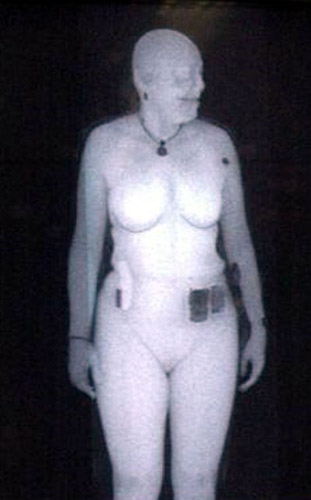
In the US, a bill called the S.A.F.E.R. A.I.R. Act has been passed, making full-body scanners mandatory in airports. These devices create a nude image of a person's body through their clothes, in order to look for hidden objects without physically removing their clothes or making physical contact. The use of these machines is controversial, raising privacy issues, as well as concerns over the use of backscatter X-rays.*
Direct high-speed rail from London to Frankfurt and Amsterdam
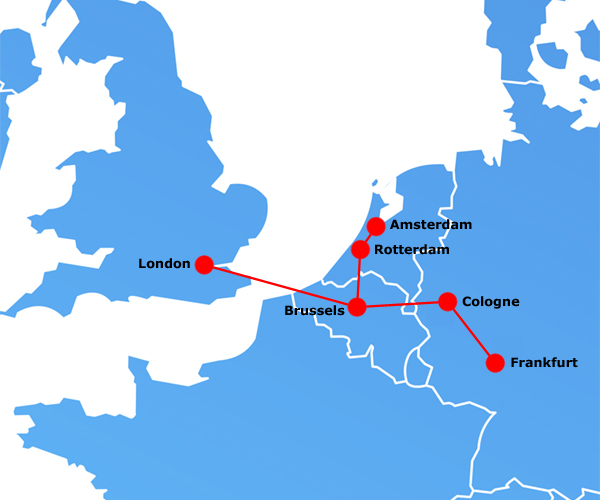
Two of Europe's biggest financial centres - London and Frankfurt - are now connected by a high-speed rail link. Trains running at 320 kph (200 mph) provide a journey time of under five hours. Combined with cheaper fares and better onboard web access, this offers a genuine alternative to air travel. The service also runs to Brussels, Cologne, Rotterdam and Amsterdam.*
© Will Fox
Expansion of the Port of Rotterdam is completed, tripling its capacity
The Port of Rotterdam is the largest port in the Western Hemisphere, and one of the busiest in the world. Completed this year is the ambitious Maasvlakte 2, the largest land reclamation project in Europe and one of the single largest earth-moving projects in history. Approximately 2000 hectares are reclaimed. With its completion, container capacity is tripled - providing a significant boost to the Dutch economy.*
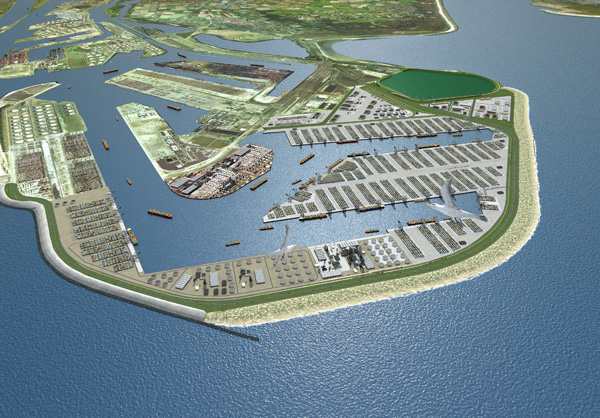
Credit: Havenbedrijf Rotterdam N.V., Projectorganisatie Maasvlakte 2.
14 nanometre chips enter mass production
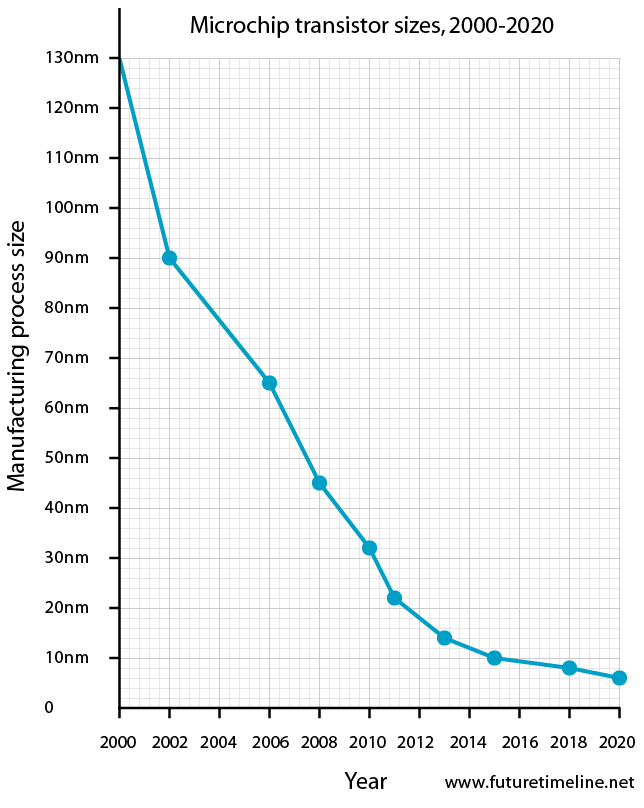
The next generation of microprocessor technology is released by Intel, with transistors now based on a 14nm manufacturing process.* For comparison, a carbon atom is 0.34nm wide.* The 4GHz barrier in stock CPU is finally being passed, thanks to the performance and energy efficiency of these new chips.
The first test launch of the Falcon Heavy
The Falcon Heavy - the most powerful rocket since the Saturn V - has its first demonstration flight this year. It is designed to lift satellites or spacecraft into orbit weighing more than 53 tons, or 117,000 pounds - over twice the capacity of the Space Shuttle and Delta IV Heavy launcher. At full power, it has thrust equivalent to fifteen 747's.
The rocket is being developed by SpaceX (Space Exploration Technologies Corporation), one of two private companies that NASA has contracted to transport cargo to the International Space Station.
SpaceX's goals include simultaneously lowering the price of orbital spaceflight and improving reliability, both by a factor of ten, whilst creating the first fully reusable orbital launch vehicle. Longer term, the company intends to design an even more powerful rocket, known as a "super heavy-lift" vehicle. This would have about three times the power of a Falcon Heavy, or about 50 percent more than the Saturn V - enough to carry people to Mars.*
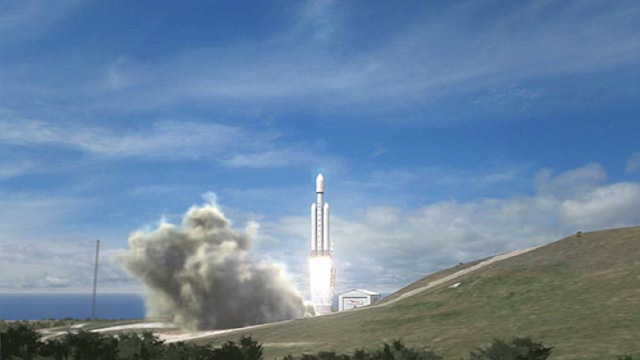
Credit: SpaceX
Solar flares are disrupting Earth's magnetosphere
The Sun reaches its solar maximum this year - the period of greatest activity in its 11-year solar cycle. Because of the unusually low level of activity in recent years, this has caused a sudden build up of energy now, with large "solar storms" hitting Earth's magnetosphere. These are strong enough to disrupt electronic systems on the ground. Satellites, air travel, car navigations, the banking system, hospital equipment, computers and many other machines are affected during this period.*
Credit: NASA
China overtakes the USA in scientific research
In terms of scientific output, China had been closing the gap between it and the developed world for several years. Thousands of new research papers were being published each year at an accelerating rate, while millions more students were entering universities as the country became more developed. At the same time, the United States had seen a steep drop in its own scientific and technological research. In 2004, China passed the United Kingdom, becoming second in terms of academic studies. The gap finally closes in 2013, as even the USA falls behind China.*
The Gaia mission is launched
While the naked human eye can see only a few thousand stars on a clear night, Gaia will map over a billion - approximately 1 percent of all stars within our own Milky Way galaxy - over the course of its five-year mission beginning in 2013. It will chart their brightness and spectral characteristics, as well as their positions and motions, forming a highly detailed three-dimensional map.*
3D technologies are widespread
3D technology is now widespread across a range of communication and entertainment platforms. It has become a mainstream element of cinema, TV, Internet, video games and even mobile. This technology provides users with a whole new level of immersion, interaction and realism.
James Cameron's Avatar, released in 2009, was a major breakthrough in terms of developing this format and raising awareness of its potential.
In 2010, new 3D TV channels were introduced and these could even be viewed without 3D glasses.* This effect was achieved via multiple projectors behind the screen, combined with a lens array creating parallax effects from any direction. Among the TV events during this time was the first ever FIFA World Cup to be screened in 3D.
Compatibility was soon incorporated into a range of consumer products including Blu-ray recorders, games consoles and personal computers. By 2013, the technology has become widespread in homes in developed countries.*
© Philcold | Dreamstime.com
Highly flexible touch sensors are appearing in a range of gadgets
Highly flexible, film-based touch sensors are entering the smartphone and tablet markets.* They are also extending touch capabilities into a range of new consumer and industrial products. Using roll-to-roll metal mesh technology, they provide a high-performance alternative to existing touch sensors. Larger, lighter, sleeker, curved and edgeless designs can now be developed for handheld devices. Thinner sensor stacks with flawless touch performance, excellent optical clarity, low sheet resistance and low power consumption are enabling designers to turn unique, futuristic concepts into functional designs at lower total system costs compared to previous market alternatives.
Launch of the PS4 and Xbox 720
2012 saw the launch of Nintendo's Wii U - the first of the eighth generation games consoles.* By late 2013, it is joined by the PS4 and Xbox 720. These new machines offer substantial improvements in graphical power. The PS4, codenamed "Orbis", is built around an AMD x64 CPU and AMD Southern Islands GPU, handling screen resolutions of up to 4000 x 2000 pixels, as well as 3D gaming in full 1080p.* The Xbox 720, codenamed "Durango", is powered by a state-of-the-art IBM Power PC CPU, featuring 16 cores, alongside a Radeon HD 7000-series graphics card.*
Full-body scanners are mandatory in US airports
In the US, a bill called the S.A.F.E.R. A.I.R. Act has been passed, making full-body scanners mandatory in airports. These devices create a nude image of a person's body through their clothes, in order to look for hidden objects without physically removing their clothes or making physical contact. The use of these machines is controversial, raising privacy issues, as well as concerns over the use of backscatter X-rays.*
Direct high-speed rail from London to Frankfurt and Amsterdam
Two of Europe's biggest financial centres - London and Frankfurt - are now connected by a high-speed rail link. Trains running at 320 kph (200 mph) provide a journey time of under five hours. Combined with cheaper fares and better onboard web access, this offers a genuine alternative to air travel. The service also runs to Brussels, Cologne, Rotterdam and Amsterdam.*
© Will Fox
Expansion of the Port of Rotterdam is completed, tripling its capacity
The Port of Rotterdam is the largest port in the Western Hemisphere, and one of the busiest in the world. Completed this year is the ambitious Maasvlakte 2, the largest land reclamation project in Europe and one of the single largest earth-moving projects in history. Approximately 2000 hectares are reclaimed. With its completion, container capacity is tripled - providing a significant boost to the Dutch economy.*
Credit: Havenbedrijf Rotterdam N.V., Projectorganisatie Maasvlakte 2.
14 nanometre chips enter mass production
The next generation of microprocessor technology is released by Intel, with transistors now based on a 14nm manufacturing process.* For comparison, a carbon atom is 0.34nm wide.* The 4GHz barrier in stock CPU is finally being passed, thanks to the performance and energy efficiency of these new chips.
The first test launch of the Falcon Heavy
The Falcon Heavy - the most powerful rocket since the Saturn V - has its first demonstration flight this year. It is designed to lift satellites or spacecraft into orbit weighing more than 53 tons, or 117,000 pounds - over twice the capacity of the Space Shuttle and Delta IV Heavy launcher. At full power, it has thrust equivalent to fifteen 747's.
The rocket is being developed by SpaceX (Space Exploration Technologies Corporation), one of two private companies that NASA has contracted to transport cargo to the International Space Station.
SpaceX's goals include simultaneously lowering the price of orbital spaceflight and improving reliability, both by a factor of ten, whilst creating the first fully reusable orbital launch vehicle. Longer term, the company intends to design an even more powerful rocket, known as a "super heavy-lift" vehicle. This would have about three times the power of a Falcon Heavy, or about 50 percent more than the Saturn V - enough to carry people to Mars.*
Credit: SpaceX

No comments:
Post a Comment